Zenocta Editorial Team
Editorial Team

10 min read
Introduction
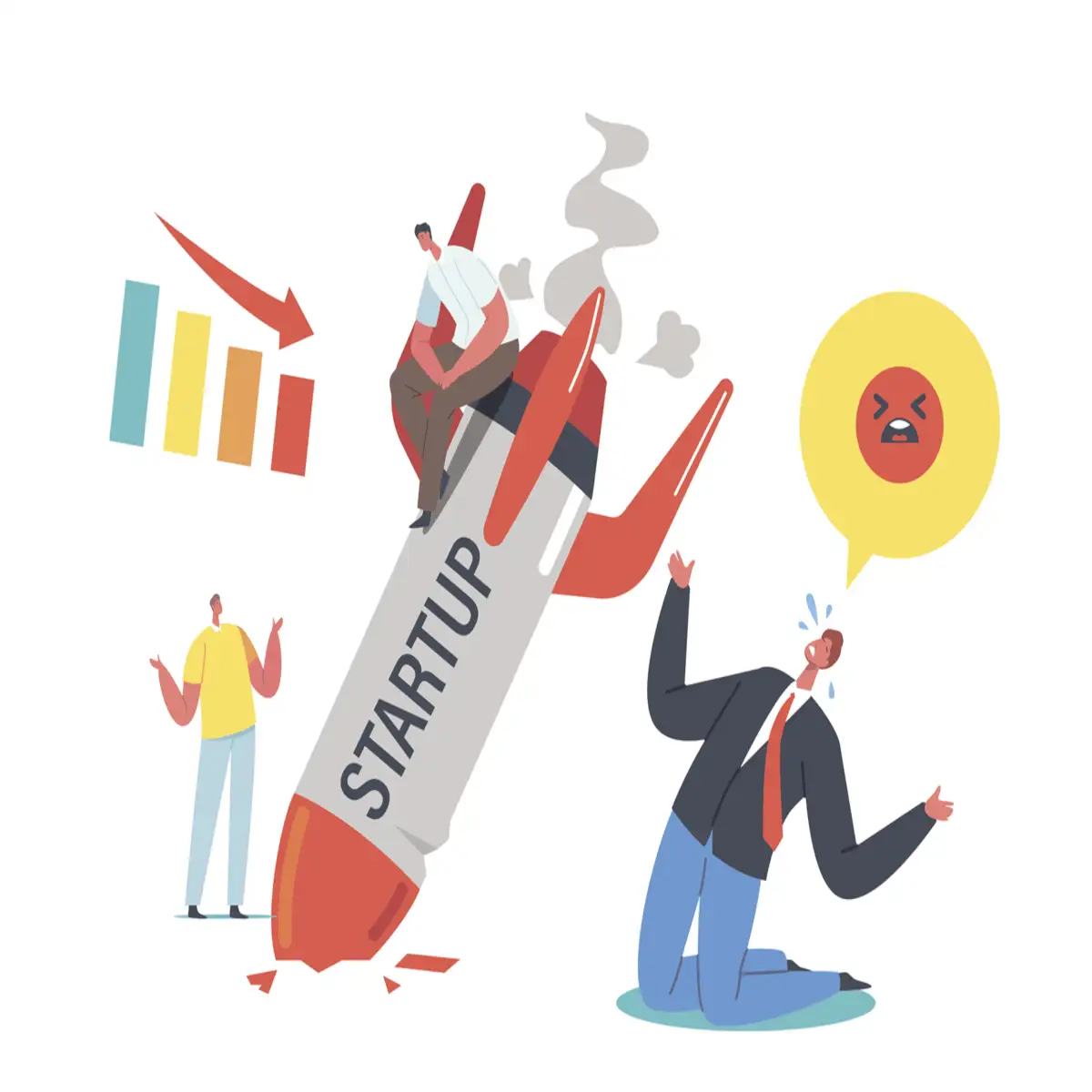
When a startup fails, the postmortem usually points to “ran out of money” or “no market need.” Both are often true, but underneath many of these failures sits a pattern of technology decisions that quietly drained budget, slowed the team down, or built a product that couldn’t adapt when the market gave feedback. These mistakes rarely look dramatic in the moment — they look like reasonable engineering choices that compound into serious problems six or twelve months later.
This article walks through the technology mistakes that show up most consistently in early-stage startups, along with practical ways to avoid each one, whether you have a technical co-founder or are relying entirely on an external development partner.
None of these mistakes are unique to inexperienced teams — experienced engineers make several of them too, usually because a decision that was correct at a previous company doesn’t automatically transfer to a very different, much earlier-stage context. Recognizing that context matters more than raw experience is the first step toward avoiding these patterns.
The Problem
Early-stage founders are making dozens of high-stakes decisions simultaneously — hiring, fundraising, positioning, and technology — often without deep technical expertise of their own. Technology decisions in particular tend to get deferred to whoever is available, whether that’s a junior developer, a freelancer, or a well-meaning technical co-founder who hasn’t built a product at this stage before. The result is a set of foundational choices made under time pressure, with limited context, that the business then has to live with for years.
The consequences rarely show up immediately, which is part of what makes them dangerous. A shortcut taken in month two might not cause visible problems until month ten, by which point the team has built substantially more product on top of that original decision, making it far more expensive to unwind than it would have been to get right the first time.
Understanding Why These Mistakes Are So Common
Most technology mistakes at the startup stage aren’t caused by incompetence — they’re caused by optimizing for the wrong thing at the wrong time. A decision that’s correct for a company with ten thousand users can be actively harmful for a company with fifty, and vice versa. The skill that separates founders who avoid these traps isn’t technical depth; it’s knowing which stage-appropriate trade-off to make and when to revisit it.
The six patterns below are ordered roughly by how early they tend to bite. Some are mistakes of excess — building too much, too early. Others are mistakes of neglect — not building enough discipline around the basics. Both categories are equally capable of derailing a promising product.
Mistake 1: Over-Engineering Before Product-Market Fit
Building for a scale you don’t have yet is one of the most common and expensive startup technology mistakes. Complex microservice architectures, elaborate permission systems, and highly configurable admin panels all make sense at scale — but before product-market fit, they mostly slow down the team’s ability to change direction quickly, which is the one capability an early-stage startup needs most.
Mistake 2: Ignoring Technical Debt Until It’s Unavoidable
The opposite mistake is equally damaging: writing code so quickly and carelessly that even small feature changes become risky and slow within months. Some technical debt is a reasonable trade-off for speed early on, but treating all debt as acceptable — never refactoring, never writing tests for core flows — eventually creates a system so fragile that the team spends more time fixing regressions than shipping new features.
Mistake 3: Choosing a Tech Stack Based on Trends, Not Fit
Picking a technology because it’s currently popular, rather than because it fits the team’s actual skills and the product’s actual requirements, is a subtle but costly mistake. A trendy but unfamiliar stack slows the team down while they learn it, and often leads to a thinner hiring pool later when the startup needs to grow the engineering team.
Mistake 4: No Clear Data Ownership or Backup Strategy
It’s remarkably common for early-stage products to have no clear backup strategy, no defined data retention policy, and unclear ownership of production infrastructure credentials. This becomes catastrophic the first time something goes wrong — a deleted database, a departed co-founder who held the only admin access, or a compliance requirement the founders hadn’t anticipated.
Mistake 5: Treating the Development Partner Relationship as Purely Transactional
Startups that hire a development team or agency purely to “build what’s in the spec,” without involving them in product strategy, often end up with technically correct software that doesn’t quite solve the real problem. The development partners who add the most value are the ones brought in early enough to flag scope risks and stage-appropriate trade-offs before code gets written, not after.
Mistake 6: Optimizing for the Interview, Not the Job, When Hiring Early Engineers
Early technical hires shape a startup’s engineering culture for years, but founders without a technical background often evaluate candidates on credentials or interview polish rather than fit for the specific, scrappy, ambiguous work early-stage engineering actually requires. A candidate who thrives at a large, well-resourced company doesn’t always thrive building the first version of a product with limited specs and constant direction changes, and the mismatch usually shows up months into the role rather than during hiring.
Examples
A common pattern: an early-stage app built with a complex, distributed backend architecture designed for millions of users, when the actual user base is in the low thousands. The team spends a disproportionate amount of engineering time managing infrastructure complexity instead of shipping product improvements, and eventually has to simplify the architecture anyway once it becomes clear the complexity isn’t paying for itself.
Another common pattern: a founding team that skips automated testing entirely to move fast in the first few months, then finds that every new feature risks breaking three existing ones, forcing the team into a slow, manual QA cycle that erases the speed advantage they were originally optimizing for.
A third pattern shows up around data ownership: a startup builds its first year of product on a founder’s personal cloud account, with no separate business-owned infrastructure and no documented access beyond that one person. When that founder later exits, gets acquired into a different role, or simply becomes unreachable during a critical moment, the rest of the team can find itself locked out of its own production systems — a completely avoidable crisis caused entirely by a missing five-minute setup step at the start.
Business Benefits of Avoiding These Mistakes
Startups that make stage-appropriate technology decisions consistently move faster over their first two to three years, not because they write more code, but because they spend less time undoing earlier mistakes. This shows up as shorter time between idea and shipped feature, fewer production incidents that require emergency fixes, and a codebase that new engineers can actually understand when the team eventually grows.
There’s also a fundraising angle: investors doing technical due diligence notice these patterns quickly, and a clean, appropriately-scoped technical foundation is a meaningful credibility signal during a raise, even though it rarely gets discussed explicitly in the pitch.
There’s a quieter benefit around team morale as well. Engineers who spend most of their time firefighting production issues caused by earlier shortcuts tend to burn out and leave faster than engineers working in a codebase that, while imperfect, was built with reasonable stage-appropriate care. Avoiding these mistakes isn’t just a technical or financial win — it’s also a retention strategy for a startup’s most expensive and hardest-to-replace resource.
Best Practices
Match Architecture Complexity to Actual Current Scale
Build for the scale you have now plus a reasonable buffer, not the scale you hope to have in three years. Revisit architecture decisions explicitly as the business grows, rather than either over-building early or refusing to ever revisit early decisions.
Budget Time for Deliberate Technical Debt Paydown
Treat technical debt as a real, trackable cost rather than an invisible one. Even a modest, consistent allocation of engineering time toward cleanup and testing prevents the kind of debt accumulation that eventually stalls a team completely.
Document Access, Credentials, and Data Ownership Early
Before this becomes a crisis, ensure there’s a documented, shared record of who has access to what, where backups live, and what the data retention and recovery plan is. This is a small effort early that prevents a potentially business-ending problem later.
Bring Your Development Partner Into Strategy Conversations Early
If you’re working with an external development team, involve them in scoping and prioritization discussions rather than handing over a finished spec to build exactly as written. The best technical partners will push back on parts of the plan that don’t make sense for your current stage — that pushback is valuable, not an inconvenience, and it’s much cheaper to hear before code is written than after.
Future Trends
AI-assisted development tools are changing the calculus around some of these mistakes — automated testing and code review assistance are lowering the cost of avoiding technical debt, and low-code platforms are reducing the risk of over-engineering by making it easier to build exactly the right amount of product for the current stage. Founders who pair these tools with disciplined, stage-appropriate decision-making will likely out-execute teams relying on tooling alone.
As more of the routine engineering work gets assisted by AI, the differentiator between startups increasingly becomes judgment rather than raw coding speed — knowing which trade-offs matter at which stage, when to accept debt and when to pay it down, and when a trendy technology is actually the wrong fit despite the hype around it. Tooling can help execute a decision faster; it can’t yet make the decision for you.
Conclusion
The technology mistakes that quietly kill startups are rarely dramatic — they’re a series of reasonable-seeming decisions made without enough context about what actually matters at the current stage. Founders don’t need to become engineers to avoid these traps; they need a development partner or technical co-founder who will make stage-appropriate trade-offs explicit, rather than defaulting to whatever seems safest or most impressive in the moment. The startups that get this right aren’t the ones with the most sophisticated technology — they’re the ones whose technology decisions consistently matched what the business actually needed at each stage.
Frequently asked questions
A useful signal is whether your team spends more time managing infrastructure complexity than shipping features users can see. If so, it’s worth reviewing whether the architecture matches your actual current scale.
Insights & Blog
Latest articles & industry insights


Related case studies

Hostel Management
PropTech
Livevo

Fashion Tech
Marketplace
Lace

Inventory & Billing
Small Business
Instobill
Curious what we can build for you?