Zenocta Editorial Team
Editorial Team

7 min read

Introduction
Almost every founder has heard the term “MVP” so many times it has started to lose meaning. In practice, a minimum viable product is a deceptively simple idea that is genuinely hard to execute well: build the smallest version of your product that lets you learn something real from actual users, without spending months and most of your budget building features nobody has validated yet.
The gap between the idea of an MVP and how founders actually build one is where most early-stage budgets get wasted. This guide walks through a practical approach to scoping, building, and launching an MVP that tests your real assumptions rather than your engineering team’s ambition.
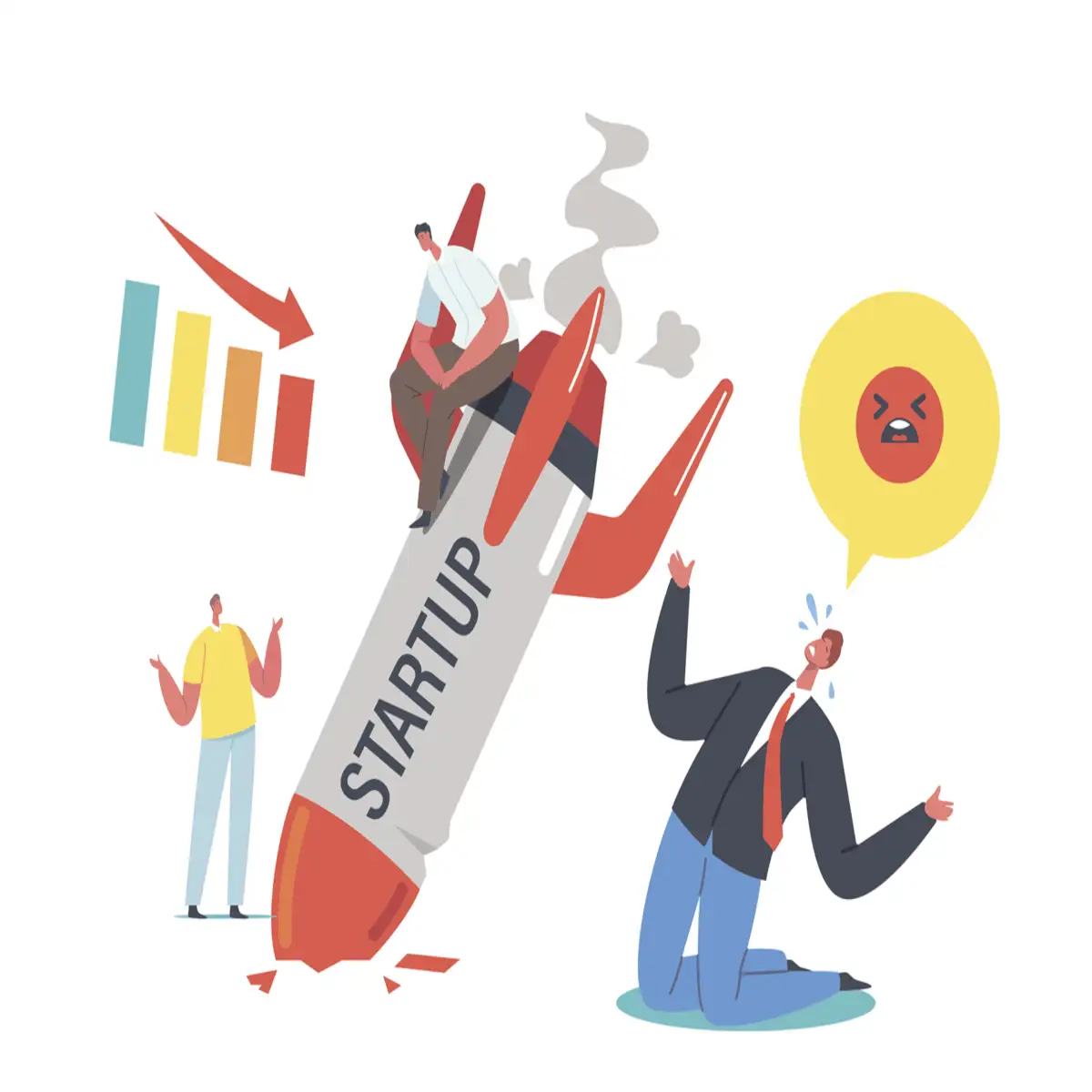
This distinction matters more than it might seem, because most early-stage capital gets burned not on any single bad decision, but on a slow accumulation of reasonable-sounding feature additions that never get validated against real user behavior.
The Problem
The most common MVP mistake is not overspending on infrastructure — it is overbuilding the product itself. Founders frequently include a login system, an admin dashboard, multiple user roles, and a polished design before confirming that anyone actually wants the core product. Each of these additions feels reasonable in isolation, but together they can consume the majority of an early-stage budget before a single real customer has used the product.
This overbuilding pattern is especially common when a founder has a technical background and enjoys the engineering work itself. Building a robust, well-architected system can feel like meaningful progress, even when it isn’t yet clear whether the underlying product idea has any market pull at all. The discipline required here is emotional as much as strategic — resisting the satisfaction of good engineering work until it’s actually validated as necessary.
This happens for understandable reasons. Founders want their MVP to look credible, and there’s a natural fear that a barebones product will turn away early users. But an MVP’s job isn’t to look finished — it’s to answer one specific question: will people actually use this to solve their problem? Every feature that doesn’t help answer that question is, at MVP stage, a distraction.
There’s also a subtler version of this mistake: building for imagined future users rather than the specific early adopters you can actually reach today. A founder who adds enterprise-grade security features before landing a single enterprise customer is often solving a problem they don’t have yet, at the expense of solving the problem they do have — proving the core idea works for anyone at all.
Understanding What “Minimum” Actually Means
“Minimum” in MVP doesn’t mean low-quality — it means scoped to a single, testable hypothesis. A well-scoped MVP answers one core question clearly: does this specific group of people, with this specific problem, actually want this specific solution enough to use it repeatedly or pay for it?
This framing shifts the entire scoping conversation. Instead of asking “what features does a product like this usually have,” the right question becomes “what’s the smallest thing that would genuinely prove or disprove our core assumption.” Those two questions often produce very different feature lists, and the second one is almost always cheaper to build.
Separating Core Value From Supporting Features
Every product idea has one or two features that deliver the core value, and a much longer list of supporting features that make the experience smoother but aren’t essential to proving the concept. A delivery app’s core value might be “order arrives reliably”; features like loyalty points, referral programs, and detailed order history are supporting features that can wait until the core loop is validated.
A simple test for separating the two: imagine removing the feature entirely and ask whether the product still answers your core hypothesis. If the answer is yes, even if the experience feels less complete, the feature belongs in a later version. If removing it means you can no longer tell whether users actually want the product, it belongs in the MVP.
What Can Be Manual at First
One of the most underused MVP techniques is deliberately doing manually, behind the scenes, what you eventually plan to automate. A marketplace MVP doesn’t need automated matching logic on day one if a founder can manually match the first fifty orders while learning what automated matching actually needs to account for. This is often called a “concierge MVP,” and it can save substantial development cost while producing better product decisions later.
Avoid the Trap of “Just One More Feature”
MVP scope tends to creep gradually rather than all at once — each individual addition seems small and reasonable, but the cumulative effect is a much larger, slower, more expensive build than originally planned. The most effective founders treat scope changes with real scrutiny even when each one looks minor, because the pattern, not any single decision, is what actually blows budgets.
Examples
A B2B SaaS Idea
Consider a founder building a scheduling tool for small clinics. Rather than building a full multi-clinic platform with custom branding and role permissions, an effective MVP might be a single-clinic version with one admin login, manually onboarded by the founder, that solves the core scheduling headache. Multi-clinic support and self-serve onboarding can be added once the core workflow is proven with a handful of real clinics.
Notice what this approach reveals quickly: whether clinics actually adopt a new scheduling habit, whether staff find it faster than their existing process, and whether the clinic is willing to pay for it — all learned from one real deployment, months before a broader, self-serve platform would have been ready to launch.
A Consumer Mobile App
A founder with an idea for a local services marketplace app doesn’t need iOS and Android native apps, a review system, and in-app payments on day one. A lean MVP built quickly — for instance using a tool like FlutterFlow to move from concept to a working app fast — focused on just browsing and contacting providers can validate demand before investing in the more complex, expensive features.
If browsing and initial contact generate genuine interest — providers responding, users actually reaching out — that’s strong evidence the concept has legs, and the more expensive investments in payments infrastructure and review systems become justified rather than speculative. If interest is weak even at this early stage, the founder has saved significant time and budget by learning that early rather than after building the full feature set.
An Internal Business Tool
Not every MVP is customer-facing. A founder building a SaaS product for warehouse inventory management might start by validating the core workflow internally with one pilot customer using a stripped-down version of the tool, refining the product based on how that single real deployment actually gets used before investing in a broader, self-serve version for many customers.
A Two-Sided Marketplace
Two-sided marketplaces are notoriously easy to overbuild, because there’s a natural temptation to build polished experiences for both supply and demand sides simultaneously. A leaner approach is to manually recruit and manage the supply side — vendors, service providers, or listings — while building a genuinely usable product only for the demand side first, then automating the supply side once there’s proof that demand actually exists.
Business Benefits
A well-scoped MVP protects runway, which is the single scarcest resource for most early-stage companies. Every rupee not spent building an unvalidated feature is a rupee available for the next iteration, marketing test, or simply more time to find product-market fit. Beyond capital efficiency, a focused MVP also produces faster, cleaner learning — when the product is small, it’s much easier to tell which specific change caused users to engage more or less, compared to a sprawling product where cause and effect get muddy.
There’s also a speed advantage: a tightly scoped MVP typically reaches real users faster, which means the founder starts learning from real behavior sooner rather than continuing to guess in a vacuum for months.
There’s a team-morale benefit too, one founders often underestimate. A small, focused MVP that ships and gets real user feedback quickly builds momentum and confidence within the founding team, whereas a sprawling, months-long build with no user feedback in sight tends to erode motivation well before launch.
Best Practices
Write Down the One Hypothesis You’re Testing
Before scoping any feature, write a single sentence describing exactly what you’re trying to learn from the MVP. If a proposed feature doesn’t help answer that sentence, it doesn’t belong in version one, regardless of how useful it might eventually be.
Keep that sentence visible throughout the build — pinned in the project management tool, referenced in scoping conversations, revisited whenever a new feature request comes up. Teams that write the hypothesis down once and then never refer back to it tend to drift into overbuilding just as easily as teams that never wrote it down at all.
Set a Hard Budget and Timeline Before Scoping Features
Deciding the budget and timeline first, then scoping features to fit within it, produces much tighter MVPs than deciding on features first and hoping the budget works out. Constraints force useful prioritization decisions that open-ended scoping tends to avoid.
Choose Tools and Platforms That Let You Move Fast
For most early-stage MVPs, speed to a working, testable product matters more than long-term architectural perfection. Frameworks like Flutter and low-code platforms like FlutterFlow let a small team build a cross-platform, functional app considerably faster than a fully custom native build — buying more validation cycles within the same budget.
Test With Real Users Before It Feels Ready
Founders consistently wait too long to put an MVP in front of real users, holding out for a version that feels more complete. The earlier you get genuine user feedback — even from a rough, partially-working version — the sooner you learn whether you’re building the right thing at all, which is far more valuable than polishing a product nobody has validated yet.
Future Trends
The tooling available for building MVPs continues to lower the cost and time required to get a testable product in front of real users. Low-code and AI-assisted development tools are shrinking the gap between an idea and a working prototype, which means the bar for what counts as a reasonable MVP timeline keeps getting shorter. Founders who treat MVP development as an ongoing discipline — always testing the next specific hypothesis rather than building a fixed roadmap — will likely have an increasing speed advantage over those who plan a full feature set up front.
This also means MVP thinking is starting to extend past the initial launch. Rather than treating “MVP” as a single phase that ends once a fuller product ships, founders who keep applying the same minimum-viable-test discipline to every major new feature — not just the original product — tend to avoid re-accumulating the same overbuilding problem a year or two after their first launch.
AI-assisted development is also changing MVP economics directly — tools that can scaffold a working prototype from a plain-language description are compressing the time between “idea” and “something a real user can click through,” which means founders can validate more hypotheses within the same budget than was possible even a couple of years ago.
Conclusion
Building an MVP without wasting your budget comes down to discipline more than technique: know the one thing you’re trying to learn, resist the pull to build supporting features before the core is validated, and choose tools that get you to real user feedback quickly. The founders who protect their runway this way don’t just save money — they make better product decisions, because they’re deciding based on real usage rather than assumptions.
None of this requires heroic self-discipline on the founder’s part alone — it requires a process that makes the disciplined choice the easy default. Writing down the hypothesis, fixing the budget before scoping features, and choosing fast-moving tools are all ways of building that process into the project rather than relying on willpower to resist scope creep in the moment.
Frequently asked questions
It depends heavily on scope and platform, but the goal should be the smallest budget that still produces a genuinely testable product — often a fraction of what a full-featured version would cost. The right question isn’t “what’s a normal MVP budget” but “what’s the minimum needed to test my specific hypothesis.”
Insights & Blog
Latest articles & industry insights

Related case studies

Hostel Management
PropTech
Livevo

Fashion Tech
Marketplace
Lace
Inventory & Billing
Small Business
Instobill
Curious what we can build for you?