Zenocta Solutions
Company

9 min read
Introduction
If you’ve landed on this article, there’s a good chance you’re evaluating who might build your next piece of software, and “who is Zenocta” is a fair question to ask before handing anyone that responsibility. This is our answer, written plainly rather than as a pitch: what we do, why we do it the way we do, and what we think “AI-driven digital transformation” should actually mean for a business, as opposed to how the phrase usually gets used.
Zenocta Solutions is a Hyderabad-based software development company. We build custom software, AI-powered automation, mobile apps, and business websites for small and medium businesses, startups, and growing enterprises. That’s the short version. The longer version is really about a specific point of view on how technology should be built for businesses that don’t have in-house engineering teams of their own.
We’re deliberately not trying to be the biggest software agency, or the one with the flashiest portfolio. We’re trying to be the team that a growing business can call directly, get a straight answer from, and trust to build something that actually fits how they operate — not a scaled-down version of what a much larger enterprise client would get.
That focus came from watching how software conversations usually go for smaller businesses. Either the vendor talks past the owner in technical jargon that doesn’t map to any real business outcome, or the owner gets handed a generic template product and told to adapt their operations around it. We wanted the opposite: a team that starts every conversation by understanding how a business actually runs today, and only then talks about what technology should change.
The Problem We Set Out to Address
Most small and medium businesses face a frustrating choice when they need custom software: hire an expensive agency built for enterprise clients and enterprise budgets, or piece together a patchwork of freelancers and off-the-shelf tools that never quite fit how the business actually operates. Neither option is built with the SME’s actual constraints in mind — limited budget, limited internal technical expertise, and a need for software that works reliably from day one rather than after months of iteration.
We started Zenocta around a simple observation: the businesses that need custom software the most — growing SMEs trying to compete with larger, better-resourced players — are usually the ones most underserved by the traditional software development market.
That imbalance shows up in very concrete ways. A hostel owner managing rooms and rent through paper registers isn’t lacking ambition — they’re lacking access to software built specifically for their scale and budget. A local garage running bookings entirely over phone calls isn’t behind the times out of choice — nobody had built them an affordable alternative. We built Zenocta to be that alternative, project by project.
There’s also a trust problem in this market that we take seriously. Many SME owners have a story about a previous software vendor who disappeared after launch, left a project half-finished, or handed over something so poorly documented that no one else could maintain it. That history makes people cautious, reasonably so. We think the right response to that caution isn’t a sales pitch — it’s a track record of following through on scope, timelines, and support commitments, project after project.
What We Actually Build
Rather than positioning ourselves as specialists in one narrow technology, we’ve deliberately built capability across the handful of areas that a growing business is most likely to actually need — mobile, web, automation, and the operational systems that tie them together. The reasoning is practical: most SMEs don’t need five different vendors for five different pieces of their digital presence, they need one team that understands how those pieces should work together from the start.
Mobile Applications
We build cross-platform mobile apps primarily using Flutter, and use FlutterFlow where a low-code approach helps a client move faster or manage costs. This covers everything from consumer-facing apps to internal operational tools that help a business run its day-to-day work more efficiently.
Websites and Web Platforms
We design and build business websites, corporate sites, and more complex web platforms, with a consistent focus on sites that are fast, genuinely SEO-friendly, and easy for the client to update themselves once the project is handed over.
AI-Powered Automation
This is where “AI-driven” in our name earns its place. We build automation that removes repetitive manual work from a business’s operations — using AI where it genuinely improves the outcome, not adding it as a buzzword feature that doesn’t change how the business actually functions.
Custom Software and Business Systems
Beyond apps and websites, we build the less visible systems that keep a growing business organized internally — inventory and billing tools, employee attendance and payroll systems, booking and scheduling platforms. These rarely get the spotlight a customer-facing app does, but they’re often what actually determines whether a business’s daily operations run smoothly or chaotically.
Data and Reporting
Most of the systems we build generate data almost as a side effect — bookings, transactions, attendance records, inventory movements. We try to make sure that data is actually usable rather than trapped in a database no one looks at, which usually means simple, honest dashboards showing the numbers a business owner actually needs to make decisions, rather than an overwhelming analytics suite built to look impressive in a demo.
Examples of How We Think About This
When we build a mobile app for a business — a hostel management platform, a vehicle service booking app, an inventory and billing tool — the underlying question we’re answering isn’t “can we build this feature,” it’s “does this specific business workflow become measurably easier once this exists.” That distinction shapes almost every scoping and architecture decision we make.
The same principle applies to AI specifically. We don’t add AI-powered features because they’re fashionable; we add them where they replace a genuinely tedious, repetitive task — automated data entry, smart notifications, predictive alerts — with something that saves real time for the people using the product day to day.
This shows up in small details that clients notice more than any marketing claim could convey — a booking app that sends the right reminder at the right time without anyone configuring it manually, an admin panel that surfaces the one alert that actually needs attention instead of burying it in noise, a website that loads quickly enough that visitors don’t bounce before it finishes rendering. None of these are dramatic, individually. Together, they’re what “the product actually works well” means in practice.
Take a women’s healthcare app as another illustrative example: the meaningful design decision wasn’t the video-call feature itself, it was making sure the app felt private and trustworthy enough that someone would actually use it for a sensitive conversation. Or a construction finance app, where the hard part wasn’t building expense-tracking screens, it was structuring partner-share calculations flexibly enough to match how each individual project’s partnership actually worked. The technical work in both cases exists entirely to serve a specific, real business need — not the other way around.
Business Benefits of Working With a Team That Thinks This Way
Clients working with a partner who prioritizes practical fit over technical showmanship tend to get software that’s easier to maintain, easier for their own team to understand, and closer to what the business actually needed in the first place — rather than an impressive-looking product that doesn’t quite solve the underlying problem. It also tends to mean a more transparent, predictable engagement: clear scope, clear pricing, and fewer surprises partway through a project.
There’s a longer-term benefit too. Businesses that start with software matched to their actual current scale find it easier to grow that software over time, because the foundation was never over-complicated or under-built in the first place. We’ve found that clients who launch lean tend to come back for meaningful second and third projects, expanding the platform as the business genuinely grows into needing more — rather than paying upfront for capacity they won’t use for years.
This approach also tends to reduce the hidden costs that come with software that doesn’t fit — the workaround spreadsheets employees build because the system doesn’t handle their actual workflow, the support tickets that stem from confusing design rather than genuine bugs, the eventual re-build that happens because the original product never matched how the business really operated. Getting the fit right the first time is, in our experience, the single biggest lever for keeping the total cost of a software investment reasonable over its lifetime.
Best Practices We Hold Ourselves To
Start With the Business Problem, Not the Tech Stack
We ask what the business is actually trying to solve before proposing any specific technology, rather than defaulting to a particular stack because it’s what we’re most comfortable building in.
Keep Pricing Transparent
We believe a client should understand what they’re paying for and why, with a clear, fixed-scope quote rather than open-ended billing. Our website design and development, and mobile app development services both start from ₹8,888, with a full quote provided after understanding the actual project scope.
Support Doesn’t End at Launch
Every project we deliver includes a post-launch support window, because software that works on launch day and breaks a month later isn’t actually finished — it just looks finished.
Build for the Team That Will Actually Use It
We design admin panels and internal tools around the people who will use them daily, who are often not technical themselves. A feature that’s technically powerful but confusing to a busy shop owner or clinic receptionist isn’t a success in our view, regardless of how well it was engineered under the hood.
Communicate in Plain Language, Not Jargon
We try to explain technical trade-offs the same way we’d explain them to a friend outside the industry — in terms of what it means for the business, not in terms of the underlying architecture. If a client can’t understand why a decision was made, we haven’t actually communicated it, no matter how technically accurate the explanation was.
Future Trends We’re Watching
We expect AI capability to keep moving from a standalone feature into the default expectation for any new software product — a business commissioning a new app or platform in a few years will likely expect some baseline of intelligent automation built in, the same way businesses today expect mobile responsiveness by default. We’re building our own roadmap around that expectation, continuing to expand how deeply AI is woven into the products we build rather than treating it as an add-on.
We’re also watching how low-code tools like FlutterFlow continue to mature, because they’re changing what’s realistic to offer at a given budget. As these tools get more capable, we expect to be able to deliver more sophisticated products within the same affordable, fixed-scope pricing model we’ve built our reputation on — which matters directly to the SMEs and startups we work with most.
More broadly, we expect the gap between what a large enterprise can afford in software and what a small business can afford to keep narrowing, driven by exactly these kinds of tooling improvements. That’s a trend we’re actively building toward rather than just observing — every efficiency we gain in our own delivery process is one we try to pass on to clients through more capability at the same price point, rather than simply higher margins.
Conclusion
Zenocta exists because we believe digital transformation shouldn’t be reserved for companies with large IT budgets, and it shouldn’t mean chasing every new technology trend either. It should mean building software that measurably makes a specific business run better — faster operations, less manual work, and tools that the people using them actually want to open every day. That’s the standard we hold every project to, and it’s the reason clients come back to us for their next one.
If any of this resonates with a problem you’re currently facing in your own business, we’d genuinely like to hear about it. The best conversations we have start with a specific, unglamorous operational headache — not an abstract wish to “go digital” — and that’s exactly the kind of conversation we’re built to have.
Frequently asked questions
Small and medium businesses, startups, and growing enterprises across industries — from healthcare and hospitality to retail, real estate, and professional services — who need practical, scalable software without enterprise-agency overhead.
Insights & Blog
Latest articles & industry insights
UPDATE
Jun 26, 2026
How Zenocta Builds Scalable Mobile Apps and Websites
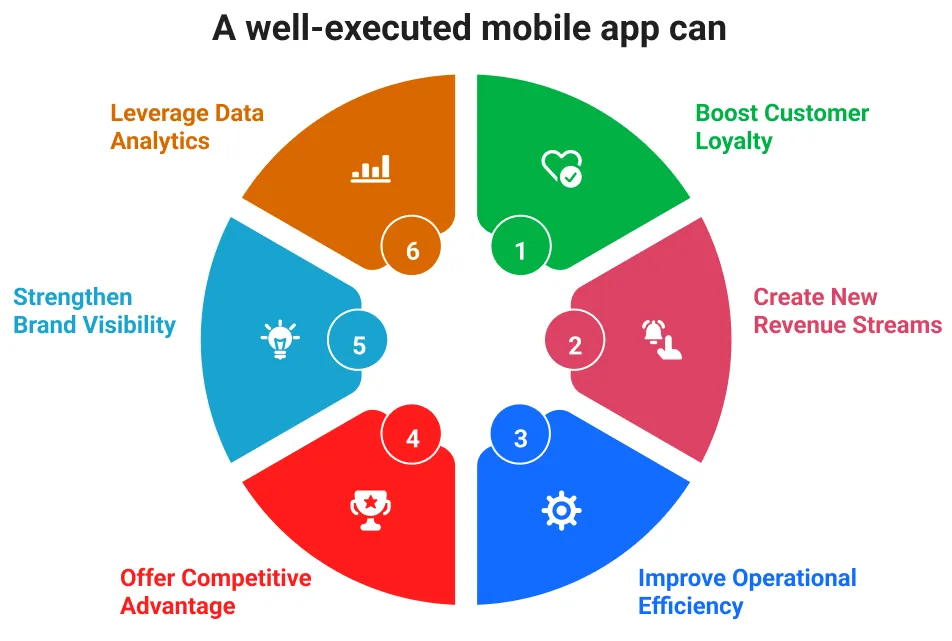
A look inside how Zenocta approaches mobile app and website architecture so that performance, permissions, and features hold up as a business grows.

Zenocta Engineering Team
Engineering
UPDATE
Jun 27, 2026
Why Businesses Choose Zenocta for Custom Software Development
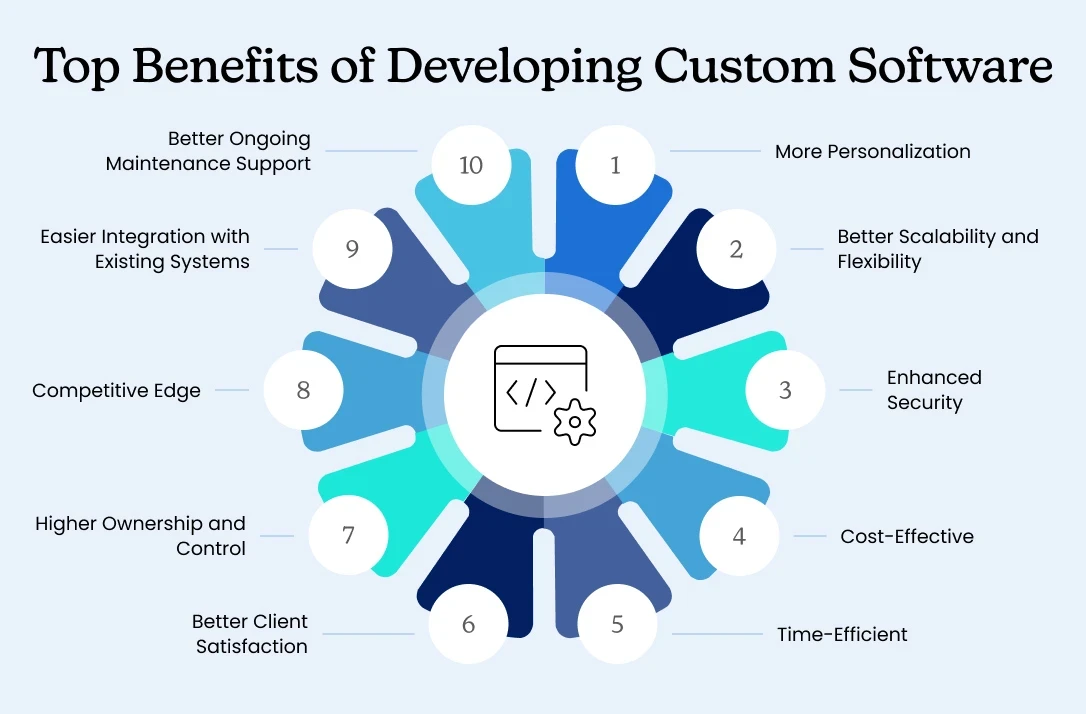
An honest look at what businesses should look for in a custom software partner, and why that's the standard Zenocta holds itself to.
Zenocta Solutions
Company
UPDATE
Jun 28, 2026

Our Software Development Process from Idea to Launch
A stage-by-stage look at how Zenocta takes a software idea from first conversation through design, development, testing, and launch.
Zenocta Engineering Team
Engineering
Related case studies

Hostel Management
PropTech
Livevo

Fashion Tech
Marketplace
Lace
Inventory & Billing
Small Business
Instobill
Curious what we can build for you?