Zenocta Editorial Team
Editorial Team

9 min read

Introduction
Most MSMEs start with off-the-shelf software, and for good reason — it’s cheap, fast to set up, and covers common needs like invoicing, basic inventory, or simple scheduling. But as a business grows and its processes become more specific, the gap between what generic software offers and what the business actually needs tends to widen. This article looks at when that gap becomes expensive enough that custom software stops being a luxury and starts being the more economical choice.
This isn’t an argument against off-the-shelf tools in general — for a huge range of standard business functions, they’re genuinely the right choice, and building custom software to replace something a generic tool already does well is usually a waste of money. The point here is narrower and more practical: knowing how to spot the specific moment when the mismatch between your process and your software has become expensive enough to justify a targeted, custom fix.
The Problem
Off-the-shelf software is built to serve as many businesses as possible, which means it’s designed around a generic version of your process, not your actual one. For a while, that’s fine — most businesses can adapt their workflow to fit the software. But eventually the mismatch shows up as workarounds: exporting data to a spreadsheet to do the calculation the software doesn’t support, manually re-entering information between two disconnected tools, or simply not tracking something important because there’s no clean way to do it in the system you have.
Each workaround individually seems minor. Together, they represent real, ongoing labor cost, and they compound as the business scales — the more transactions, staff, and customers you have, the more that manual patchwork costs every single month.
There’s also a quieter cost that’s harder to notice: the workaround becomes institutional knowledge rather than a documented process. New staff have to be taught “the way we actually do it around the software” instead of simply being shown how the system works, which adds friction to every hire and makes the business more dependent on a handful of people who’ve learned the workaround by heart.
Explanation
Custom software means building an application designed specifically around how your business actually operates, rather than adapting your business to fit generic software. It doesn’t have to mean building everything from scratch — it often means automating the one or two processes that are genuinely unique to your business, while continuing to use off-the-shelf tools for everything standard.
It Removes Workarounds, Not Just Adds Features
The value of custom software isn’t a longer feature list — it’s eliminating the manual steps a generic tool forces you into. If your business has a pricing rule, an approval process, or a reporting need that doesn’t map cleanly onto a standard tool, custom software can encode that exact logic instead of forcing staff to work around it by hand.
It Scales With Transaction Volume, Not Just Feature Count
A workaround that costs ten minutes a day is manageable at low volume. At higher volume, that same workaround multiplied across more transactions, more staff, and more customers becomes a real operational bottleneck. Custom software built around your actual process removes that bottleneck at the source.
It Becomes an Asset, Not Just an Expense
Unlike a subscription to generic software, custom software is something the business owns and can continue to evolve. As your process changes, the software can change with it, rather than you being locked into whatever a third-party vendor decides to support next.
It Can Integrate the Tools You Already Rely On
Custom software doesn’t have to mean starting from a blank slate. A common and often more cost-effective approach is building a thin, purpose-built layer that connects your existing off-the-shelf tools together — pulling data from your accounting software, your inventory system, and your booking tool into one dashboard, for example — rather than replacing any of them outright.
It Can Be Built Incrementally
Custom software doesn’t need to launch as a finished, complete system. A common and lower-risk approach is building a first version that solves the single most painful part of a process, putting it into real use, and then expanding it in stages based on what’s actually needed — rather than trying to specify every feature upfront before any of it is validated by real, daily use.
Examples
A Distributor With a Complex Pricing Structure
A distributor with tiered pricing based on customer type, order volume, and region found that generic billing software couldn’t handle the combination of rules, forcing staff to calculate prices manually before entering them. A custom billing tool encoding those exact pricing rules removed that manual step entirely.
A Service Business With a Unique Booking Workflow
A service business whose bookings depended on staff availability, equipment availability, and location simultaneously found that generic scheduling tools only handled one variable at a time. A custom booking system built around all three constraints together eliminated the double-bookings that were happening under the generic setup.
A Manufacturer Needing Industry-Specific Reporting
A manufacturer needed compliance reports formatted to a specific industry standard that no generic tool supported out of the box, forcing someone to manually reformat exported data every month. A custom reporting module generated that exact report format automatically from existing production data.
A Retailer Connecting Disconnected Sales Channels
A retailer selling through a physical store, a basic e-commerce site, and a few marketplace listings found that each channel tracked inventory separately, leading to occasional overselling. A custom integration layer connecting all three channels to a single, shared inventory count solved the problem without requiring the retailer to abandon any of the existing platforms.
A Logistics Business With Non-Standard Route Planning
A small logistics business with delivery routes that depended on vehicle capacity, delivery time windows, and driver availability found that generic route-planning tools only optimized for distance, ignoring the other constraints that actually mattered to the business. A custom route-planning tool built around all three factors together reduced both missed delivery windows and wasted vehicle capacity.
Business Benefits
The direct benefit of custom software is time — removing manual workarounds frees staff to focus on higher-value work instead of data entry and reformatting. The less obvious benefit is accuracy: manual workarounds are also where errors creep in, and removing them tends to reduce mistakes along with the time they take.
There’s also a competitive angle. A business running software built around its exact process can often operate faster and more precisely than a competitor still working around the limits of generic tools, particularly in a business with any real operational complexity.
A less obvious benefit is negotiating leverage with your own growth. When your operational process is encoded directly into software rather than living in a handful of employees’ heads, the business becomes easier to hand off, easier to hire into, and easier to scale — because the process itself, not just the people running it, is the thing that’s documented and repeatable.
Custom software can also reduce risk in a way that’s easy to overlook. A business relying on a generic tool is exposed to that vendor’s decisions — a pricing change, a feature removal, a shift in product direction that no longer serves smaller customers well. A business relying on software it owns doesn’t carry that same exposure, and can decide for itself when and how the tool evolves.
Best Practices
1. Don’t Replace Everything at Once
Custom software works best when it targets the specific process causing the most friction, while standard tools continue to handle everything generic. Trying to custom-build an entire business system from scratch is rarely the right first step.
2. Document the Workaround Before Building the Fix
Before commissioning custom software, clearly write out the exact manual workaround it needs to replace. This makes the requirements concrete and prevents scope from ballooning during development.
3. Plan for Growth, Not Just Today’s Volume
Build custom software with your near-term growth in mind, not just your current transaction volume, so the investment doesn’t need to be revisited again in a year.
4. Choose a Development Partner Who Understands MSME Constraints
Custom software for an MSME needs a different approach than an enterprise project — a focus on the highest-impact process first, a realistic budget, and a build that a small team can actually maintain.
5. Keep the Existing Tools That Still Work
Resist the urge to treat custom software as a reason to rip out every existing tool. Keep what already works well and use custom development specifically for the gap that generic software can’t close — this keeps both the cost and the risk of the project proportional to the actual problem.
6. Start With a Clear, Measurable Goal
Before starting a custom software project, define what success actually looks like — hours saved per week, errors reduced, a specific manual step eliminated. A clear, measurable goal keeps the project focused and makes it much easier to judge afterward whether the investment paid off.
Future Trends
As development tools like Flutter and low-code platforms make custom software faster and more affordable to build, the cost gap between generic and custom solutions keeps narrowing. What used to require a large development budget can now often be built for a fraction of the cost and in a fraction of the time, which is steadily making custom software a realistic option for MSMEs, not just large enterprises.
Expect this trend to continue as AI-assisted development further reduces build time for well-scoped custom tools. The practical effect for MSMEs is that the threshold for when a manual workaround becomes expensive enough to justify a custom fix keeps getting lower — meaning custom software is likely to become a normal, mid-sized business decision rather than something reserved for companies with dedicated technical budgets.
Expect custom software for MSMEs to increasingly take the form of focused mobile apps rather than heavy desktop systems, reflecting how small business owners and staff actually work — from a phone, on the move, between other tasks. A well-built mobile-first custom tool tends to see far higher day-to-day adoption than a desktop system that requires staff to be at a specific workstation to use it.
Conclusion
Off-the-shelf software is a reasonable starting point for most MSMEs, but it’s not the finish line. As a business grows and its processes become more specific, the manual workarounds required to force generic software to fit start costing real time, money, and accuracy. Investing in targeted custom software — focused on the one or two processes causing the most friction — is often the more economical choice once that gap becomes visible, not an extravagance reserved for larger businesses.
The businesses that get this right treat custom software as a series of focused, well-justified decisions rather than a single large leap. Start with the process that costs you the most time or the most errors, prove the value there, and let that experience guide where the next investment makes sense.
None of this requires abandoning the tools that already serve your business well. The businesses that benefit most from custom software are usually the ones running a healthy mix — reliable off-the-shelf tools for standard functions, and a small number of custom-built solutions for the handful of processes that make their business genuinely different from everyone else’s.
If you’re weighing this decision for your own business, the simplest test is honest and practical: list every manual workaround your team performs in a typical week, and ask which one, if it simply disappeared, would free up the most time or prevent the most mistakes. That answer is usually where custom software delivers the clearest, fastest return.
Frequently asked questions
Not necessarily. Custom software doesn’t have to mean building an entire system from scratch — targeting the one process causing the most friction keeps costs proportional to a small business budget, and modern development tools have made building custom apps significantly more affordable.
Insights & Blog
Latest articles & industry insights
UPDATE
Jul 7, 2026

How MSMEs Can Reduce Costs Through Digital Transformation
Digital transformation isn't just for large enterprises. Here's how MSMEs cut real costs with practical, affordable digital tools.

Zenocta Editorial Team
Editorial Team
UPDATE
Jul 8, 2026
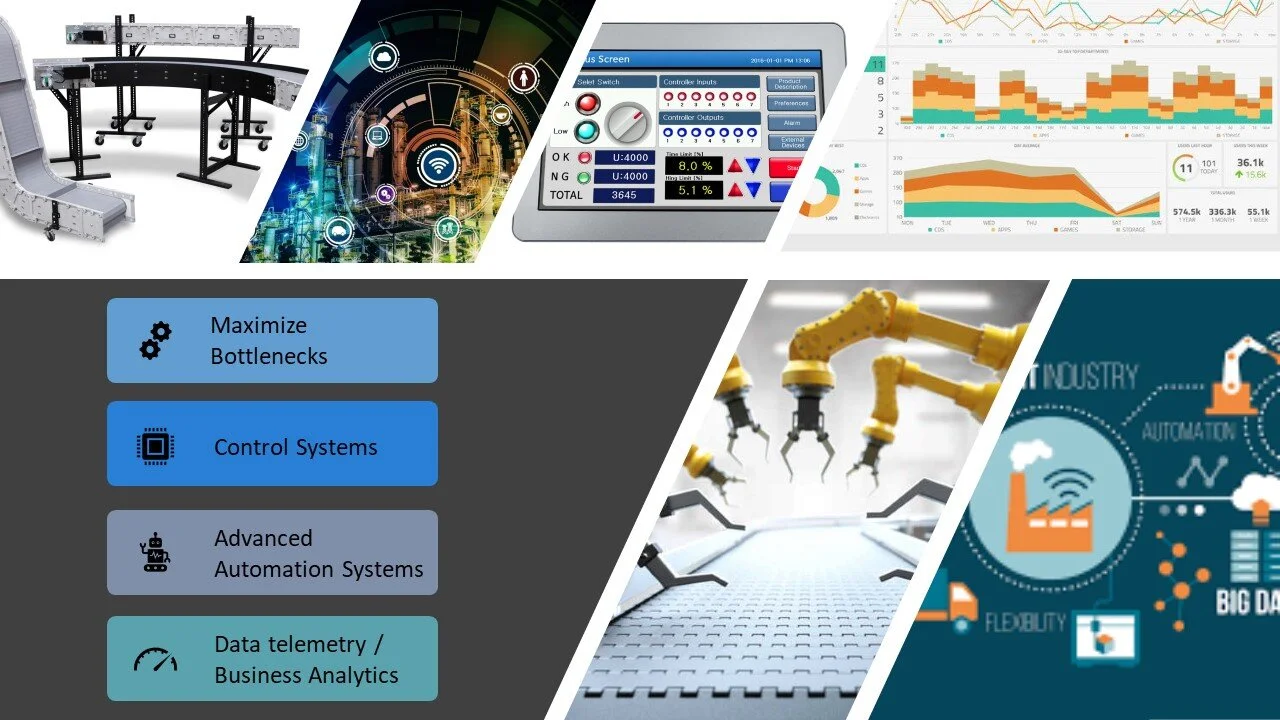
Business Automation Ideas for Manufacturing Companies
From production tracking to quality checks, here's where automation delivers real, measurable relief for manufacturing businesses.
Zenocta Engineering Team
Engineering
Related case studies

Hostel Management
PropTech
Livevo

Fashion Tech
Marketplace
Lace
Inventory & Billing
Small Business
Instobill
Curious what we can build for you?