Zenocta Editorial Team
Editorial Team

9 min read

Introduction
For most small and medium businesses, “digital transformation” sounds like something reserved for large enterprises with dedicated IT departments and six-figure software budgets. In practice, some of the most impactful digital transformation happens at the MSME level, precisely because the inefficiencies are so visible and the cost of fixing them is so much lower than the cost of ignoring them.
This article looks at where MSMEs actually lose money to manual, disconnected processes, and how targeted digital tools — not a sweeping enterprise overhaul — bring those costs down.
It’s worth being clear about what this article is not proposing. It isn’t an argument for replacing every spreadsheet and paper register in your business overnight, and it isn’t a case for buying the most feature-rich software you can find. It’s a practical look at where cost genuinely leaks out of an MSME’s daily operations, and which categories of digital tools close those leaks without requiring a large budget or a dedicated technical team.
The Problem
Most MSMEs don’t lose money in one dramatic place. They lose it in dozens of small, repeated inefficiencies: an employee re-entering the same data into two different spreadsheets, a manager manually reconciling invoices at month-end, a shop owner tracking inventory on paper and discovering stock discrepancies only after a customer complains. None of these individually feels like a crisis. Together, they consume hours of paid staff time every week and quietly inflate the cost of running the business.
The other hidden cost is decision quality. Without accurate, up-to-date data, owners and managers end up making decisions — on pricing, staffing, purchasing — based on gut feel rather than what’s actually happening in the business. That guesswork has a cost too, even if it never shows up as a line item.
There’s a third cost that’s easy to overlook: the cost of things falling through the cracks entirely. A follow-up call that never happens because it wasn’t written down anywhere central, a supplier payment that’s missed because it lived only in one person’s inbox, a customer complaint that never reaches the person who could actually fix the underlying issue. These aren’t inefficiencies in the sense of wasted time — they’re lost opportunities and avoidable mistakes, and in a small business, a handful of them in a single quarter can matter more than a modest reduction in administrative hours.
Explanation
Digital transformation, at the MSME scale, simply means replacing manual, disconnected processes with software that captures data once and makes it usable everywhere it’s needed. It typically touches a handful of areas.
Automating Repetitive Administrative Work
Billing, invoicing, attendance tracking, and basic reporting are prime candidates for automation because they follow predictable rules. Software that generates an invoice from an order, or calculates attendance and pay automatically from check-in data, removes hours of manual work every week without requiring specialized staff.
The value here compounds over time. A task that takes twenty minutes a day doesn’t sound significant on its own, but across a year that’s roughly eighty hours of staff time — two full working weeks — spent on something that a properly configured system does in seconds. Multiply that across billing, attendance, and basic reporting together, and the total time recovered is often enough to justify the cost of the software several times over within the first year.
Centralizing Data Instead of Scattering It
Many MSMEs run on a patchwork of spreadsheets, WhatsApp messages, and paper registers. Centralizing that information into a single system — even a simple cloud-based one — removes the duplicated effort of keeping multiple records in sync, and it means everyone is working from the same numbers.
Centralization also changes how quickly problems get noticed. When stock levels, customer orders, and payment status all live in one place, a discrepancy tends to surface immediately rather than weeks later during a manual reconciliation. That earlier visibility is often where the real savings come from — not from any single automated task, but from catching small problems before they grow into expensive ones.
Moving to Cloud-Based Tools Instead of Local Infrastructure
Cloud-based software removes the need to buy and maintain physical servers or pay for expensive on-premise licenses. Most MSME-relevant tools today are subscription-based and scale with usage, which means the upfront cost of getting started is far lower than it used to be.
Improving Customer-Facing Operations
Digital transformation isn’t only about internal efficiency — it also shows up in how customers experience the business. A retail or service business that can confirm stock availability instantly, send an automated order update, or generate a professional invoice on the spot projects a level of reliability that’s hard to match with manual processes. That reliability directly affects repeat business, which is one of the least visible but most valuable cost savings available to an MSME: it’s far cheaper to retain an existing customer than to acquire a new one.
Examples
A Retail Store Reducing Stock Losses
A small retail business tracking inventory manually often discovers stock issues only during a physical count, by which point the losses have already happened. Moving to a simple digital inventory and billing system that updates stock automatically at the point of sale catches discrepancies early and reduces both over-ordering and stock-outs.
A Service Business Automating Billing
A local service provider generating invoices manually each month spends real staff hours on something a connected billing tool can do automatically the moment a job is marked complete. That time gets redirected toward serving more customers instead of paperwork.
A Manufacturer Digitizing Purchase Tracking
A small manufacturer tracking raw material purchases on paper often can’t answer a simple question — how much did we spend on a given material this quarter — without manually combing through receipts. A basic digital tracking system answers that question instantly, which directly improves purchasing decisions.
A Wholesale Distributor Improving Order Accuracy
A small distributor taking orders by phone and writing them down by hand is exposed to transcription errors that turn into costly fulfillment mistakes — wrong quantities, wrong items, missed orders entirely. Moving order intake into a simple digital form or ordering portal removes that manual transcription step and gives both the distributor and the customer a shared, accurate record of exactly what was ordered.
Business Benefits
The direct benefit is time: fewer hours spent on manual data entry and reconciliation means staff time gets redirected toward work that actually grows the business. The indirect benefit is often larger — better data leads to better decisions on pricing, staffing, and purchasing, which compounds over time in ways that are hard to see month to month but very real over a year.
There’s also a resilience benefit. A business running on centralized digital records is far less dependent on any one person’s memory or handwriting, which matters enormously when staff change or when an owner needs to step away from day-to-day operations.
A less obvious benefit is what it does for growth planning. An MSME running on manual processes often can’t take on significantly more volume without hiring proportionally more administrative staff, because the workload scales linearly with the paperwork. A business running on properly automated systems can often absorb meaningful growth in orders or customers without a matching increase in back-office headcount, which changes the underlying economics of scaling the business.
It’s also worth noting what digital transformation does for the sale of the business itself, if that’s ever a consideration. A business with clean, digitized records of revenue, costs, and operations is significantly easier for a prospective buyer or investor to evaluate than one where the real numbers live partly on paper and partly in the owner’s head. Even for owners with no near-term plans to sell, having that clarity available is a form of insurance.
Best Practices
1. Start With the Process That Hurts the Most
Don’t try to digitize everything at once. Identify the single process causing the most pain — usually billing, inventory, or attendance — and fix that first.
2. Choose Tools That Match Your Actual Scale
Enterprise software built for large organizations is often overkill for an MSME, both in cost and complexity. Look for tools sized to your business, with room to grow rather than built for a scale you’re not at yet.
3. Involve the Staff Who Will Actually Use It
Digital tools fail when the people using them daily weren’t part of choosing or setting them up. Get input from the staff closest to the process before rolling out a new system.
4. Measure Before and After
Track a simple baseline — hours spent on a task, or frequency of errors — before making a change, so you can actually see whether the new system is working rather than assuming it is.
5. Budget Time for Migration and Training, Not Just Software Cost
The software subscription is rarely the real cost of digital transformation — the real cost is the time it takes to move existing records into the new system and get staff comfortable using it. Plan for a transition period where both the old and new process run in parallel, and resist the temptation to skip training in the interest of moving faster; a tool that’s rolled out without proper onboarding tends to get abandoned within a few weeks.
6. Revisit the Process Periodically, Not Just Once
A digital process that fit the business well a year ago may not fit it as well today, especially if the business has grown or changed direction. Build in a periodic check-in — even once or twice a year — to ask whether the current setup still matches how the business actually operates, rather than assuming the first implementation is permanent.
Future Trends
As affordable, purpose-built software for small businesses continues to expand, the barrier to digital transformation keeps dropping. Tools that once required custom development are increasingly available as configurable, ready-to-use platforms suited to MSME budgets. Expect this to continue: more industry-specific tools built for the exact workflows of retail, manufacturing, or services, rather than generic software that MSMEs have to awkwardly adapt to their needs.
Automation is also moving beyond basic administrative tasks into lightweight decision support — simple tools that flag unusual patterns in inventory, spending, or customer behavior without requiring a data analyst to interpret them. For MSMEs, this means access to the kind of early-warning insight that used to require enterprise-scale reporting infrastructure, delivered instead through straightforward dashboards built for a small business owner’s actual daily routine.
Mobile-first tools are also becoming the default rather than the exception. Many MSME owners and staff manage their business primarily from a phone, not a desk, and the digital tools built for this segment increasingly reflect that — favoring quick, on-the-go entry and simple mobile dashboards over desktop-oriented software that assumes someone is sitting at an office computer for most of the day.
Conclusion
Digital transformation for an MSME rarely looks like a dramatic, expensive overhaul. It looks like fixing the specific manual processes that quietly cost the most time and money, one at a time, with tools sized appropriately for the business. The MSMEs that treat this as an ongoing practice — steadily replacing manual work with reliable digital systems — build a real cost advantage over competitors still running on spreadsheets and paper.
The businesses that get the most value out of this approach tend to share one habit: they treat digital transformation as a series of small, deliberate upgrades rather than a single project with an end date. Each fixed process frees up time and improves data quality, which makes the next upgrade easier to identify and justify — and that compounding effect, more than any individual tool, is what ultimately drives the cost savings down over time.
Frequently asked questions
Yes. Most modern digital tools for MSMEs are subscription-based and scale with usage, so the upfront cost is far lower than traditional enterprise software, and you can start with a single process rather than an organization-wide rollout.
Insights & Blog
Latest articles & industry insights
UPDATE
Jul 8, 2026
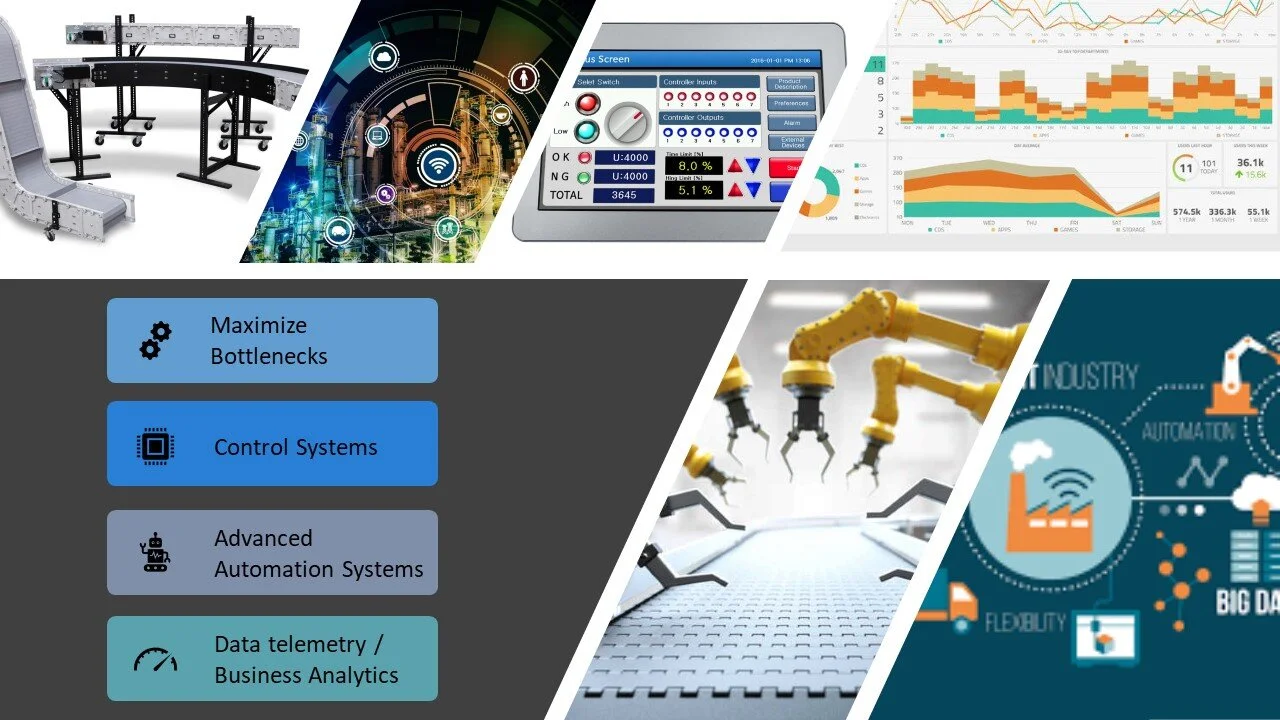
Business Automation Ideas for Manufacturing Companies
From production tracking to quality checks, here's where automation delivers real, measurable relief for manufacturing businesses.

Zenocta Engineering Team
Engineering
UPDATE
Jul 9, 2026

Why Every MSME Should Invest in Custom Software
Off-the-shelf software has real limits. Here's when investing in custom software actually pays off for a growing MSME.
Zenocta Editorial Team
Editorial Team
Related case studies

Hostel Management
PropTech
Livevo

Fashion Tech
Marketplace
Lace

Inventory & Billing
Small Business
Instobill
Curious what we can build for you?